The Medium Is the Message, and Why It Matters for Product Design
Origins of the Phrase
Marshall McLuhan, a Canadian media theorist, coined "the medium is the message." It's the title of the first chapter of his 1964 book Understanding Media: The Extensions of Man.
His point was that the content of a medium matters less than the medium itself. The form changes how we think, work, and relate to each other, no matter what it carries. He argued that the real "message" of any technology is the change in scale, pace, or pattern it introduces into human life. His example was the railroad. It didn't invent travel or transport. It made them faster and bigger, and that reshaped cities, work, and leisure no matter what the trains carried.
What This Meant for Design Before AI
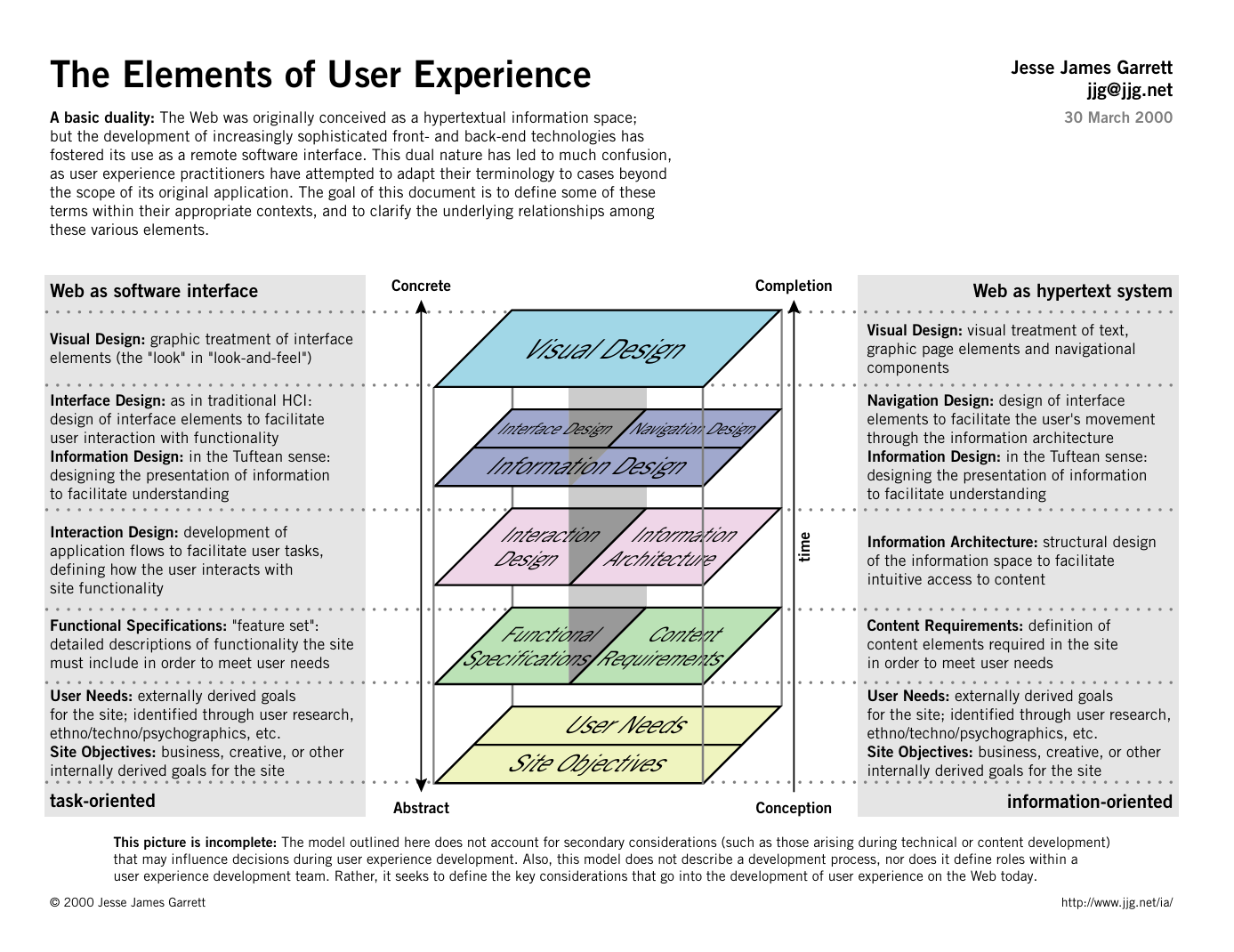
Before AI prototyping, the medium was our main tool for steering feedback. We worked at a deliberate level of fidelity and system depth, from the whole system down to a single element on screen. Jesse James Garrett's five planes model comes to mind as a way to map artifact types to different levels, from the abstract to the concrete.
For example, wireframes were intentionally low fidelity to keep attention on interactions, layout, and hierarchy. That was the realm of interaction design, which provided a strong foundation to layer information and visual design on top of. The medium of the artifact told people what kind of feedback we wanted.
When design systems became standard and easy to use in Figma, the instinct was to skip wireframes and go straight to high-fidelity screens. In a sense, visual design had already been decided by the system and if the components are easy to grab and use, it seemed like a no-brainer to take the easy route. But feedback wasn't scoped to interactions. People commented on color, spacing, and polish, because the medium is the message. A polished screen invites polished-screen feedback.
What Changes with AI
Now fidelity goes even higher. AI gives us working prototypes and real websites. While it takes effort to gather, organize, and craft what we put into our AI tool of choice, the actual building of a high-fidelity prototype takes minutes. Again, it's easy enough to get closer to the end state, so why not do it? Interaction design, information architecture, information design, visual design, motion design, and bugs all show up in one artifact, and reviewers react to all of it at once, making it harder for the designer to analyze the feedback and diagnose the real issue hiding behind an innocuous piece of feedback. Not receiving the feedback at all is another possibility, not to mention the likely impossible task of designing all of those things at once.
A fully functional prototype shared too early sends the message "this is finished," and it's hard to ask for early-stage input with that message implied.
So how do we do it now?
The simple answer is don't throw out the old methods. AI makes them easier.
When I started, I meticulously drew wireframes in Adobe Illustrator. Now I can roughly sketch out what I’m thinking, then generate them with AI in minutes. Or better yet, craft a wireframe skill to make it consistently repeatable! The same goes for a site map, a concept diagram, or a focused task flow. We can move fast without sacrificing the intention, craft, and care of the old methods.
Some teams create implicit or sometimes explicit pressure to deliver prototypes and skip everything else. Guess what? That was happening well before Claude Code and Codex. Our responsibility goes beyond driving toward a great experience. We also guide the team on design thinking and the best methods that get us from the observation of a user/customer need to a polished experience they love.
The Main Takeaway
"The medium is the message" is a reminder to be cognizant of where you are on the journey to a design solution. Choose the artifact that gets you the right feedback from the right people at the right time, because whatever you put in front of them will send a message about the kind of feedback they should give you. Make it count.
– M.A.